If you are sourcing aluminum parts for semiconductor equipment, 6061 and 7075 are the two grades you will see most often. They look similar, but they behave differently in machining, strength and corrosion. Choosing the wrong one can mean a part that is too soft, too hard to weld, or more expensive than it needs to be.
At GHX, we machine both grades to drawing for semiconductor equipment parts, up to 500 mm in size. This guide explains the difference in plain terms, so you can specify the right material on your drawing.
What is the difference?
6061 is an aluminum-magnesium-silicon alloy. It is the general-purpose choice: good strength, good corrosion resistance, good weldability, and it anodizes well.
7075 is an aluminum-zinc alloy. It is much stronger, close to some steels in tensile strength, but it is less corrosion resistant, harder to weld, and more expensive.
In short: 6061 is for housings, brackets and parts that need to resist corrosion. 7075 is for parts that need maximum strength in a small, light part.
6061 vs 7075 at a glance
| Property | 6061 | 7075 |
|---|---|---|
| Typical tensile strength | Around 310 MPa | Around 570 MPa |
| Corrosion resistance | Good | Fair, needs surface protection |
| Weldability | Good | Poor, generally not welded |
| Machinability | Good, stable | Good, but higher tool wear |
| Anodizing | Good, even finish | Possible, less consistent |
| Typical cost | Lower | Higher |
Values are typical for the alloy, not a guarantee for a specific part. Final performance depends on temper, geometry and heat treatment.
When to choose 6061
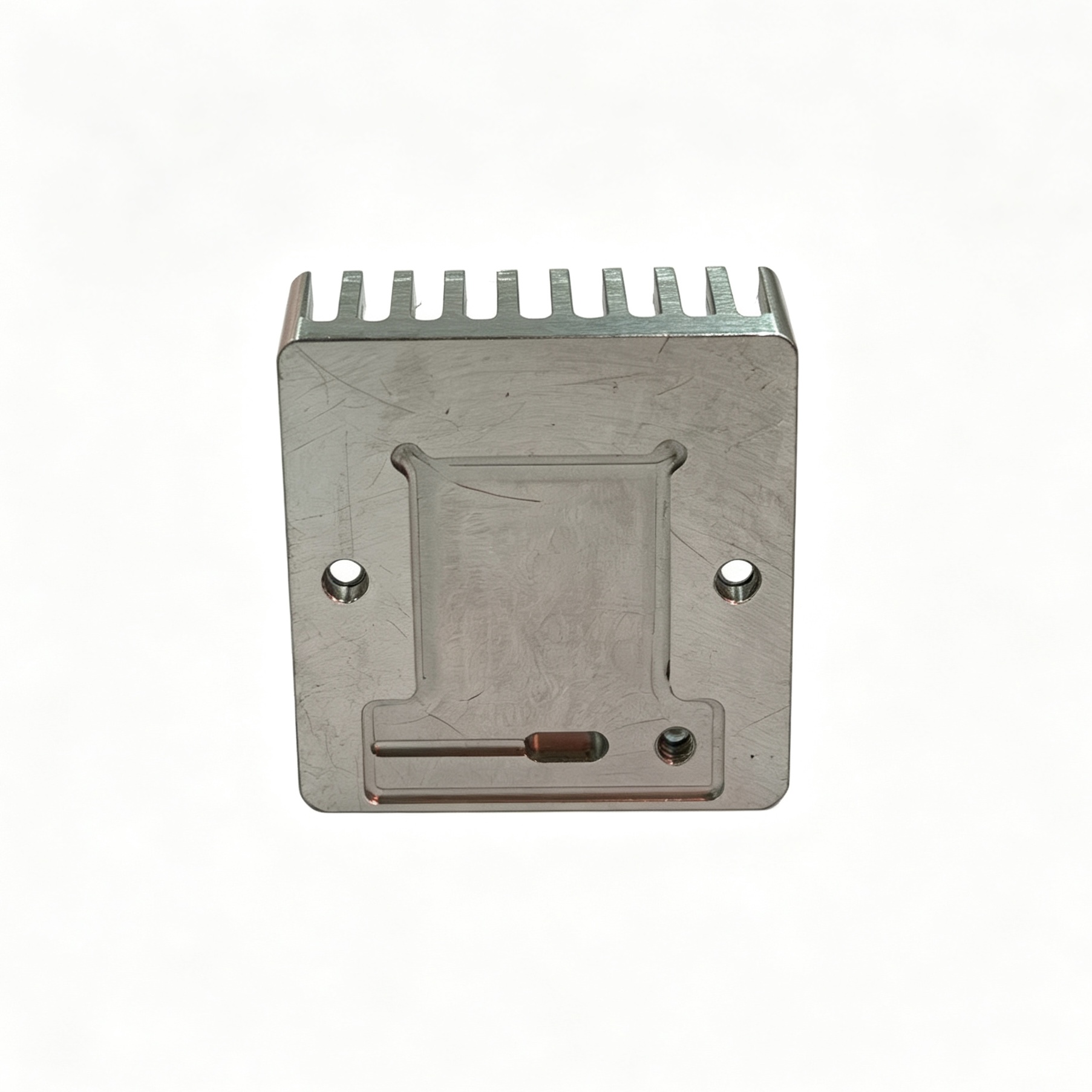
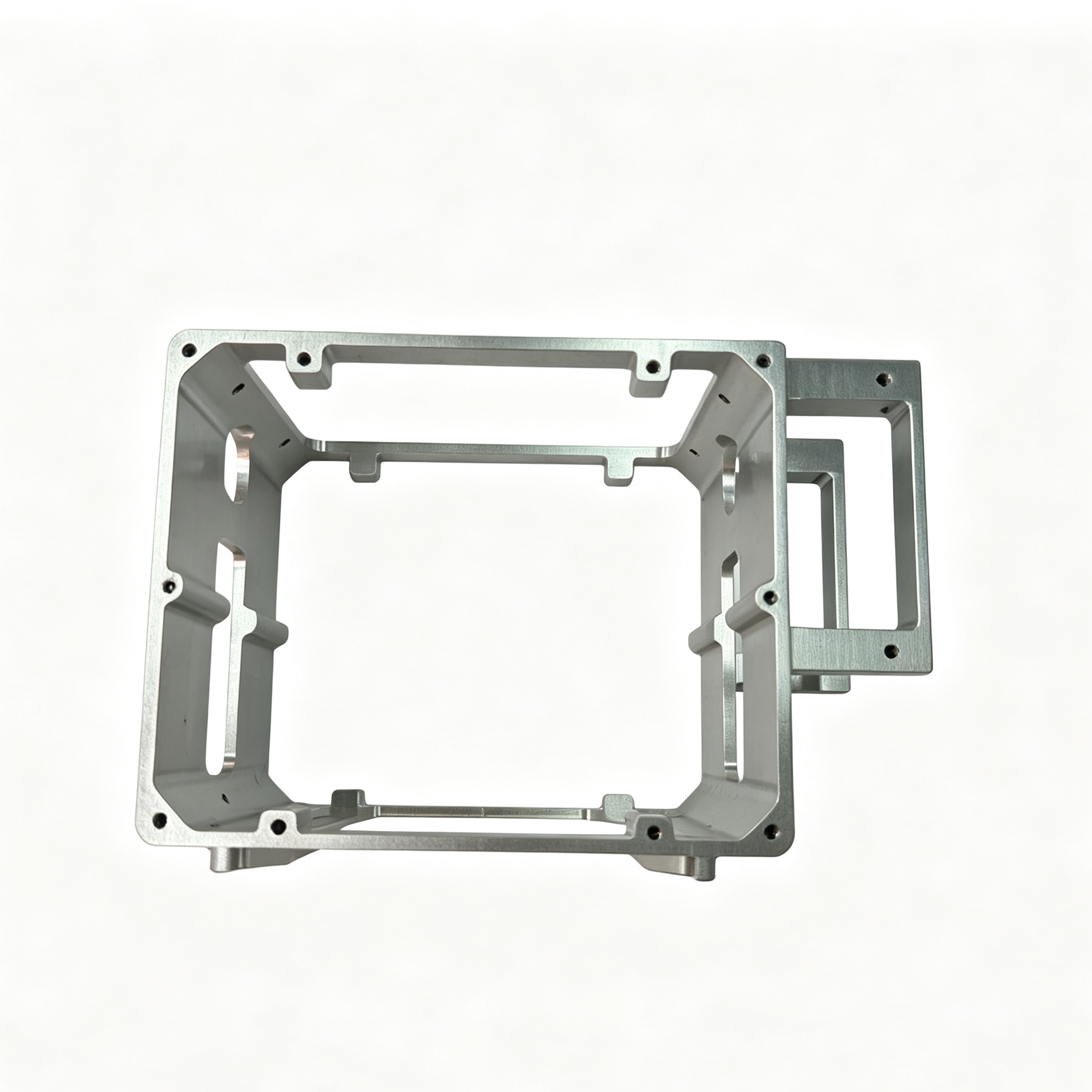
Choose 6061 for most semiconductor equipment parts: vacuum chamber housings, covers, brackets, flanges, heatsinks, wafer handling frames and structural parts that are exposed to air or moisture.
It is easier to machine to a stable finish, it holds up better without coating, and it keeps cost down for larger parts. If your drawing does not call out a high strength requirement, 6061 is usually the right starting point.
When to choose 7075
Choose 7075 when strength and weight matter more than corrosion resistance: high-load fixtures, clamps, robot end-effector parts, thin-wall structural parts and parts that must stay rigid under load.
Because 7075 is stronger, you can often make the wall thinner and the part lighter. Tell us on the drawing if the part will be anodized or coated, as 7075 needs surface protection in corrosive environments.
What GHX can hold
For suitable features, we hold ±0.005 to 0.01 mm, and ±0.02 to 0.05 mm depending on material and geometry. Surface finish is Ra 0.1 to 3.2. Achievable values depend on part design.
We offer 5-axis machining, CNC turning and milling, slow wire EDM and precision grinding. Materials include aluminum 6061, 6063, 7075 and 5052, stainless steel 303, 304, 316 and 316L, brass, carbon steel, POM, nylon and PEEK. If you can buy the material, we can machine it, or you can supply the material yourself.
There is no fixed MOQ. One-piece prototypes are available, with samples in about 2 days. Production lead time is case by case. We give DFM feedback with the quotation, 7x24, and we produce to your drawing or sample. Our factory in Wuxi, China has 186 machines and 210 employees, and we are ISO 9001 certified.
FAQ
Can I use 7075 instead of 6061 without changing the drawing?
Not always. 7075 is stronger but less corrosion resistant and harder to weld. If your part is welded or needs a consistent anodized finish, stay with 6061 unless your engineer approves the change.
Which grade is better for a vacuum chamber part?
6061 in most cases. It machines stably, resists corrosion, and anodizes evenly. Use 7075 only when the chamber part also carries a high structural load.
What is the largest aluminum part you can make?
Up to 500 mm. Send your STEP file and drawing, and we will confirm machinability in DFM feedback.
What do you need to quote?
A 2D drawing in PDF or DWG and a 3D file in STEP, IGS or X_T, or a physical sample. Tell us the material grade, temper if required, tolerance, surface finish and quantity.
How to get a quote?
Send your drawing and 3D file to GHX. We will review the design for manufacturability and quote to drawing, with no fixed MOQ.